Tackling Staircase Moves in Abbey Wood Flats
Posted on 18/06/2026
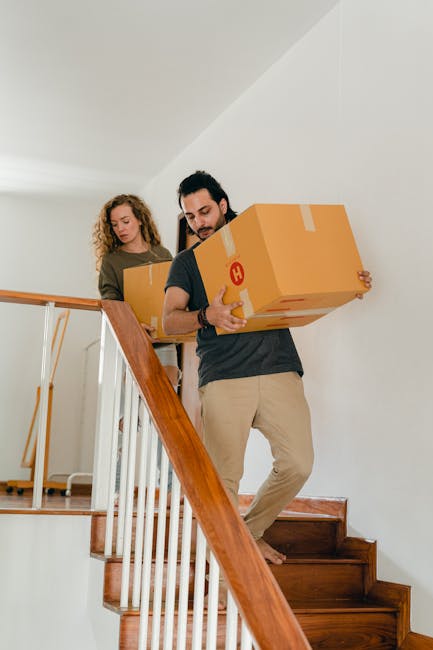
Moving out of a flat is rarely a straight line from A to B, and if there's a staircase involved, the whole day can suddenly feel a lot bigger than expected. That is especially true in Abbey Wood, where flats can mean narrow stairwells, awkward turns, shared entrances, limited parking, and the kind of everyday little obstacles that turn a simple move into a careful operation. Tackling Staircase Moves in Abbey Wood Flats is really about preparation, judgement, and knowing when a job needs a steady pair of experienced hands.
In this guide, we'll walk through how staircase moves work, why they matter, what to watch out for, and how to plan the move so your furniture, walls, and back all get through the day in one piece. You'll also find practical checklists, a comparison table, and a realistic example from a typical flat move. Truth be told, stairs can be the part people underestimate most.
Why Tackling Staircase Moves in Abbey Wood Flats Matters
Staircase moves matter because stairs change everything: the route, the lifting technique, the timing, and the risk profile. In a flat move, you are not just moving objects from one room to another. You are moving them through shared spaces that may be tight, slippy, poorly lit, or full of corners that seem to have been designed by someone with a sense of humour.
Abbey Wood flats often bring a mix of modern apartment blocks and older conversions, and both can create their own moving headaches. A sofa may fit through the hallway, but not the bend on the second flight. A mattress can feel light in the room yet become awkward when you're trying to angle it around a bannister. Even a fridge-freezer can become a problem if the stairwell is narrow and the landing is smaller than you expected.
It matters for safety too. Rushing stairs is where scratches, strained backs, damaged steps, and chipped paint happen. And once one person loses balance, the whole team has to react fast. Not ideal, obviously.
If your move involves bulky furniture, awkward white goods, or a lot of boxes, it helps to combine staircase planning with broader move preparation. A useful place to start is efficient packing techniques for relocating, because tidy, balanced packing makes stairs far easier to manage. You may also find it helpful to read about premove decluttering strategies, since fewer items means fewer trips.
How Tackling Staircase Moves in Abbey Wood Flats Works
At its simplest, staircase moving works by breaking a difficult route into smaller, safer actions. Instead of trying to carry everything quickly, you assess the staircase, prepare the items, assign roles, and move one piece at a time with proper control.
In a well-run flat move, the process usually starts before anyone lifts a box. You measure the largest furniture items, check the stair width, note ceiling height on landings, and look for hazards such as loose mats, clutter, and low lighting. Then you decide which items can be carried normally, which need two people, and which may need specialist handling or dismantling.
The most important principle is simple: control beats speed. A careful, well-angled carry is better than a fast, clumsy one. Most staircase damage happens in the final few feet when people think they're nearly done and relax. That last step is where the scrape often happens. Funny how that works.
For heavier or more awkward pieces, you'll often need a moving strap, furniture blanket, trolley for flat sections, or a decision to dismantle the item in advance. If you're dealing with particularly difficult items, such as a piano, the logic changes again. In those situations, specialist planning is usually wiser than improvisation. For more on that, see the challenges of moving a piano and the dedicated piano removals Abbey Wood service page.
Key Benefits and Practical Advantages
When staircase moves are handled properly, the benefits show up in all the places people care about most: safety, speed, lower stress, and less damage. That's the practical side. But there's also a quieter benefit: you feel more in control of the day.
- Less risk of injury: Proper lifting and route planning reduce strain on backs, shoulders, and knees.
- Lower chance of damage: Good protection keeps walls, stair edges, banisters, and furniture in better condition.
- Fewer delays: A planned staircase move avoids repeated stops, awkward re-shuffling, and last-minute panic.
- Better teamwork: When everyone knows the route and the hand signals, the move becomes much smoother.
- Less stress in the building: Shared hallways and stairwells stay cleaner and calmer for neighbours.
There's also a financial angle. Damage and wasted time can push a move from manageable to expensive in a hurry. A careful approach helps protect the property and can reduce the chance of unexpected extra work. If you're comparing moving support, the broader furniture removals Abbey Wood service information can help you judge what level of help is appropriate.
Expert summary: The best staircase move is rarely the fastest one. It is the one that keeps the route clear, the load balanced, and the team in sync from the first step to the last.
Who This Is For and When It Makes Sense
This kind of planning is useful for anyone moving from a flat, but it becomes essential when the staircase is tight or the items are awkward. Students, renters, first-time buyers, and families all run into the same issue eventually: the furniture was easy to buy, then suddenly very difficult to get downstairs.
It makes sense to take staircase planning seriously if any of the following apply:
- you live above ground level and have no lift;
- your stairwell has a bend, landing, or narrow entrance;
- you own bulky furniture like wardrobes, sofas, beds, or appliances;
- you're moving at short notice and need the day to stay organised;
- you're trying to protect a rented property and avoid deposit deductions;
- you have limited help and can't safely manage heavy lifting alone.
Students moving into or out of flats often have a few large items and lots of boxes, which can be deceptively tiring. If that sounds familiar, student removals Abbey Wood may be relevant. If you're after a rapid turnaround, you might also look at same day removals Abbey Wood for time-sensitive situations.
Sometimes the move is bigger than you thought it would be. That happens. A lot. A one-bed flat can generate more stair traffic than a small house move if everything is coming down one careful item at a time.
Step-by-Step Guidance
Below is a practical approach you can use for most staircase moves in Abbey Wood flats. Keep it simple and do not skip the planning stage. It pays off.
- Walk the route before lifting anything. Check the stair width, turns, ceiling height, banister clearance, door swing, and floor condition.
- Measure large items. Compare the height, width, and depth of sofas, mattresses, wardrobes, appliances, and headboards with the stairwell space.
- Decide what should be dismantled. Remove legs, shelves, handles, headboards, and other detachable parts where sensible.
- Clear the path. Move shoes, baskets, bins, loose rugs, children's toys, and anything that could catch a foot.
- Protect the building. Use blankets, corner protection, and careful padding around any high-contact areas if allowed and practical.
- Assign roles. One person leads, one supports, and one watches corners, doors, and landing edges. Clear communication is everything.
- Use the correct carry technique. Keep loads close, avoid twisting, and move slowly on stairs. This is where the basics of kinetic lifting can be genuinely useful in plain-English form.
- Move one item at a time. Don't try to be heroic. Staircases are not impressed by bravado.
- Pause on landings. Reset grip, breathe, and check the next turn before continuing.
- Inspect the space afterward. Look for scuffs, dropped screws, chipped paint, or anything that needs attention before you leave.
If the job involves a bed frame or mattress, use the moving-specific advice in tips for safely moving your bed and mattress. Beds are common, but they are not automatically easy. A mattress on a stairwell can feel like a giant sail if the corridor catches a draft. Slightly ridiculous, but true.
Expert Tips for Better Results
A few small decisions make staircase moves much smoother. In practice, the best results come from what you do before the first item is lifted.
Choose the right time of day
Morning often works best because people are less tired, communal areas are usually quieter, and there's more daylight. If you're moving in winter, the difference between a bright morning and a late afternoon move can be surprisingly noticeable in shared hallways.
Keep the landing clear for turning
Most mishaps happen at the turn, not on the straight bit. Landings need enough room for the item to pivot. If your staircase has a tight bend, take an extra minute to angle the item before committing to the turn.
Wrap sharp or fragile edges
Use blankets, bubble wrap, or cardboard protection on corners, especially for furniture with hard edges. Even one unprotected corner can mark a wall or catch on plaster. It's a small thing, but it matters.
Work with gravity, not against it
Going downstairs is often harder than going up because the load wants to run ahead of you. Keep the item slightly controlled from the upper side and move slowly. If you are not confident, stop and reset. No shame in that at all.
Don't ignore hidden weight
Some items look manageable until you start moving them. A drawer unit with hidden contents, a washing machine with trapped water, or a solid bed base can be a bit of a trap. Empty everything properly and check for loose parts.
For awkward or heavy solo moves, it's worth reading solo heavy lifting techniques. Even if you're not moving alone, the principles help you understand balance and body positioning. And if you're sorting out the rest of the move too, stress-free house moving advice can help bring the bigger picture together.
Common Mistakes to Avoid
Most staircase problems are not caused by one massive error. They come from a cluster of small ones. That's what makes them sneaky.
- Underestimating the route: People measure the furniture and forget the landing, doorframe, or stair turn.
- Leaving the space cluttered: One dropped shoe or loose bag on the stairs can throw someone off balance.
- Carrying too much at once: It may save one trip, but it often makes the move slower and less safe.
- Skipping communication: If nobody says "stop", "up", "down", or "turn", confusion arrives quickly.
- Not protecting the property: A flat move is not just about the items. Walls and banisters matter too.
- Forgetting the weather: Wet footwear and damp stairwells are a bad mix, especially in winter.
- Trying to force oversized items through narrow routes: Sometimes dismantling is the answer. Not glamorous, but effective.
One of the biggest mistakes is starting late and getting tired halfway through. Once people are exhausted, judgement drops. That is when "it'll be fine" becomes the most expensive phrase in the room.
Tools, Resources and Recommendations
You don't need a truck full of kit to move safely, but the right basics can make a serious difference.
| Tool or Resource | What It Helps With | Best Use Case |
|---|---|---|
| Furniture blankets | Protecting surfaces and walls | Sofas, wardrobes, tables, appliance edges |
| Removal straps | Improving grip and balance | Heavy items on stairs or landings |
| Gloves with good grip | Preventing slips | Boxes, boxes again, and awkward furniture corners |
| Floor and corner protectors | Reducing scuffs and marks | Shared hallways, tight corners, rental properties |
| Clear labelling | Speeding up room placement | Multi-box flat moves with lots of trips |
There are also a few useful pages that help round out a staircase move. If your items need temporary holding space, storage Abbey Wood can be useful between move dates. For a broader planning overview, services overview gives a clearer picture of the options. And for box planning and packing supplies, packing and boxes Abbey Wood is a practical companion piece.
If you're preparing to move a sofa, it's also worth checking sofa condition and long-term storage techniques. Sofas often survive the stairs if they're protected properly. They are less forgiving when dragged, dropped, or twisted in a hurry.
Law, Compliance, Standards, or Best Practice
For staircase moves, the main legal and compliance concerns are usually health and safety, manual handling, and avoiding damage to shared property. You do not need to turn the day into a legal seminar, thankfully, but a sensible standard of care is expected when moving heavy goods in communal buildings.
In UK practice, good moving standards usually mean that risks are assessed before lifting, loads are handled by people who can safely manage them, and the route is kept as clear as reasonably possible. If a move looks unsafe, the responsible decision is to pause, adjust the plan, or bring in help. That applies even if you are "nearly done". Especially then.
For customers and residents, it is also normal to respect building rules, neighbour access, lift booking arrangements where relevant, and noise considerations. Communal stairs are shared spaces. A bit of courtesy goes a long way, and it avoids a lot of awkwardness.
Where safety matters most, it is sensible to refer to the company's own policies too. Pages like insurance and safety and health and safety policy are useful trust signals because they show how risk is handled in practice. If you're comparing providers, removal companies Abbey Wood can help you understand the type of support available.
Options, Methods, or Comparison Table
Different staircase moves call for different methods. The best choice depends on the item, the route, and how much help you have. Here's a simple comparison that may help.
| Method | Best For | Pros | Watch Out For |
|---|---|---|---|
| Two-person manual carry | Boxes, chairs, smaller furniture | Flexible, simple, cost-effective | Needs coordination and good lifting technique |
| Dismantled move | Beds, wardrobes, shelving | Makes tight stairs easier | Takes time and requires reassembly later |
| Specialist handling | Pianos, very heavy or fragile items | Safer for awkward loads | Usually more expensive, but often worth it |
| Mixed approach | Full flat moves with varied items | Flexible and realistic | Needs planning so it doesn't become chaotic |
If you are deciding between a full removals team and a smaller van-based option, it helps to think about the building as much as the distance. A local flat move may only need a modest setup, but a difficult staircase can justify more hands. The man and van Abbey Wood option can suit smaller moves, while house removals Abbey Wood is more relevant when the overall move is larger.
For some people, the main decision is whether to do it themselves at all. If in doubt, choose the option that keeps the day calm. Calm tends to be cheaper than chaos in the long run. Usually.
Case Study or Real-World Example
Here's a realistic example. A couple in an Abbey Wood flat on the third floor had a sofa, double bed, chest of drawers, a tall bookcase, and around twenty boxes. The stairwell had one tight turn and a narrow landing. On paper, it looked manageable. In practice, it was a bit of a puzzle.
Before moving day, they measured the sofa and realised it would not take the turn upright. Rather than forcing it, they removed the feet, wrapped the arms, and rotated it sideways with two people on the carry. The bed frame was dismantled the night before, which saved a lot of swearing the next morning, if we're honest. The bookcase was emptied fully so it would not wobble, and the boxes were stacked by weight: books in small boxes, lighter items in medium boxes.
The key win was that they kept the landing clear and paused at each turn. No rushed grabs. No "just pull it through". The move took a little longer than they expected, but there were no scratches, no wall damage, and no one needed ice on a shoulder afterwards. That is a good day in removals terms.
If they had needed more support, they could have compared options through removals Abbey Wood and reviewed practical expectations through pricing and quotes. For short-notice changes, urgent same-day removals in Abbey Wood is a useful related read.

Practical Checklist
Use this checklist before moving anything down the stairs.
- Measure stair width, landings, and any tight corners.
- Measure large furniture and compare it against the route.
- Dismantle items where possible and keep fixings in labelled bags.
- Empty drawers, cupboards, and appliances before moving.
- Clear shoes, rugs, cables, and clutter from the route.
- Protect walls, corners, and furniture edges where needed.
- Assign a lead person to give simple instructions.
- Wear sturdy shoes with good grip.
- Lift with your legs and keep loads close to the body.
- Pause on landings and never rush a turn.
- Check communal areas and the property for damage afterwards.
- Have a backup plan for anything too large or too heavy.
One small but useful tip: keep a cloth or towel handy for damp handrails or dusty stair edges. It sounds minor, but a slightly slippery grip can ruin a very good plan. Also, yes, tea should probably wait until the heavy stuff is down.
Conclusion
Tackling staircase moves in Abbey Wood flats is less about strength and more about preparation, patience, and smart decision-making. If you plan the route, protect the space, keep your loads balanced, and know when to dismantle or ask for help, the whole move becomes far more manageable. That's true whether you're moving a sofa, a bed, a stack of boxes, or the last awkward item nobody wanted to claim.
The real goal is simple: get everything down safely, keep the property in good condition, and finish the day without that drained, slightly heroic feeling people get after wrestling a wardrobe through a narrow stairwell. You can avoid that. Most of the time, anyway.
For a smoother next step, it may help to explore broader support and moving options across Abbey Wood, especially if your staircase is only one part of a bigger flat move. And if you're still weighing up the cost, the moving route, or whether to bring in extra help, take a calm look at what fits your situation best.
Get a free quote today and see how much you can save.